Electrocardiograph System
Analog signal acquisition and filtering system for real-time monitoring of the heart's electrical activity
Overview
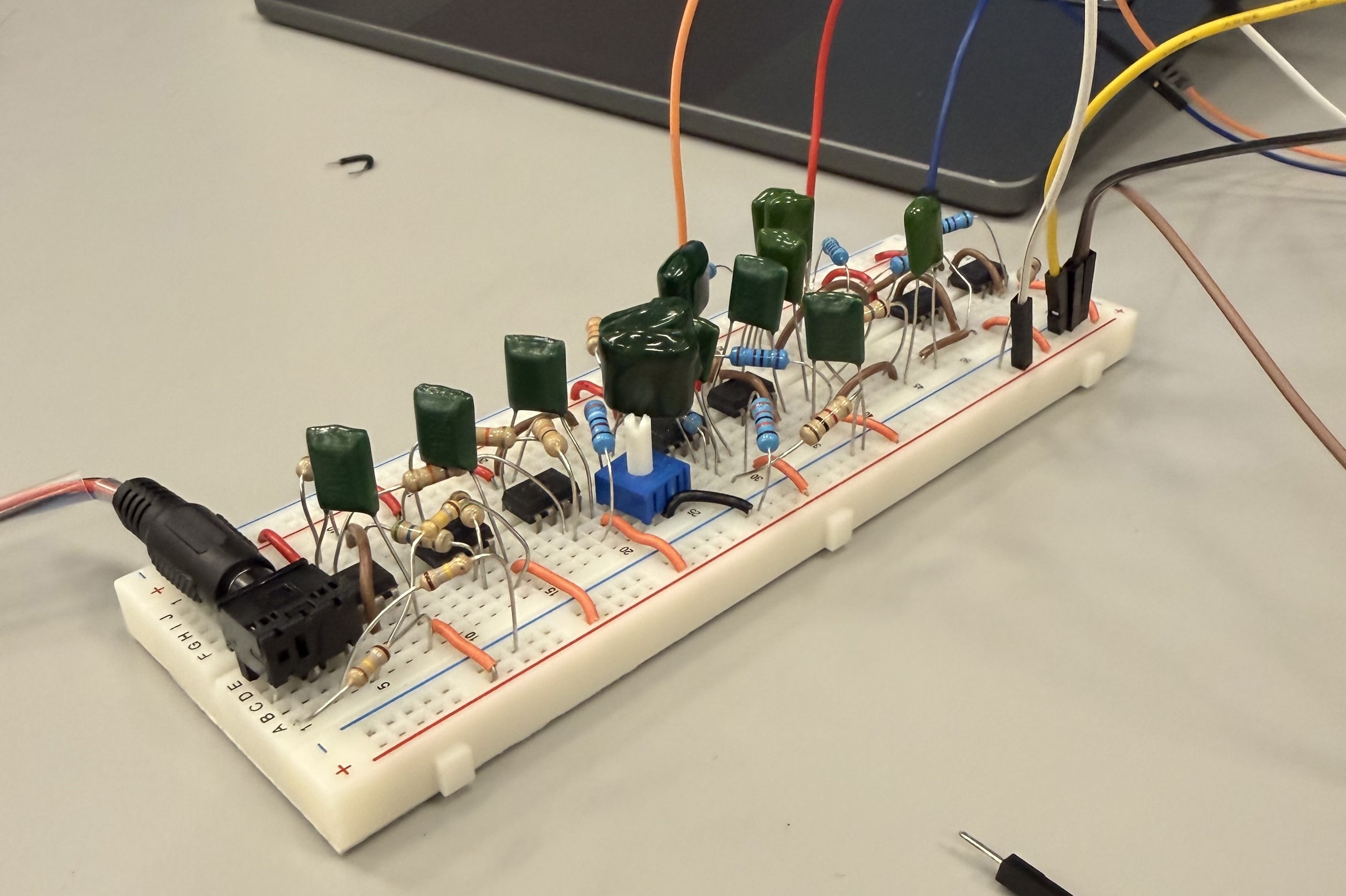
I designed, simulated, and built an electrocardiograph (ECG) system capable of measuring and displaying the electrical activity of the human heart. The project involved designing and integrating several analog circuit stages to amplify small cardiac signals and remove unwanted noise.
The system combined a three-op-amp instrumentation amplifier, a high-gain band-pass filter, a second-order Butterworth low-pass filter, and an active 60 Hz notch filter. Each stage was simulated in LTspice and tested on a breadboard before being integrated into the complete heart monitor. The final system was connected to electrodes placed on the body to measure cardiac signals in real time.
Analog Signal Chain
Instrumentation Amplifier
Designed a three-op-amp instrumentation amplifier with approximately 20× differential gain, using carefully selected and tuned resistors to minimize common-mode interference.
Bandpass Filtering
Added a high-gain band-pass filter with approximately 100× gain and cutoff frequencies near 0.5 Hz and 700 Hz to amplify the small ECG signal while filtering unwanted frequencies.
Low-Pass Filter
Designed a second-order Butterworth low-pass filter with a 40 Hz cutoff frequency to reduce high-frequency noise while maintaining unity passband gain.
60 Hz Notch Filter
Designed and tuned an active notch filter to attenuate 60 Hz power-line interference using closely matched resistor and capacitor values.
Signal Acquisition & Amplification
The ECG signal was acquired through electrodes connected to a three-op-amp instrumentation amplifier. Because the heart produces very small electrical signals, the amplifier needed to provide high differential gain while rejecting interference common to both inputs.
I selected and adjusted resistor values to achieve a differential gain of approximately 20 while minimizing common-mode gain. A high-gain band-pass filter was then added to bring the signal into a measurable range, followed by a 40 Hz low-pass filter to remove higher-frequency noise.
Together, these stages achieved an overall differential gain of approximately 2000, with an effective signal bandwidth of roughly 0.5–40 Hz.
60 Hz Noise Rejection
To reduce interference from nearby electrical equipment and power lines, I designed an active notch filter centered at 60 Hz. This filter was added after the low-pass stage to further clean the amplified ECG signal.
One of the main challenges was achieving sufficient attenuation at 60 Hz because small differences in resistor and capacitor values affected the filter's response. I adjusted component values and verified the circuit through LTspice simulations and oscilloscope measurements to improve noise rejection.
Frequency-Domain Validation
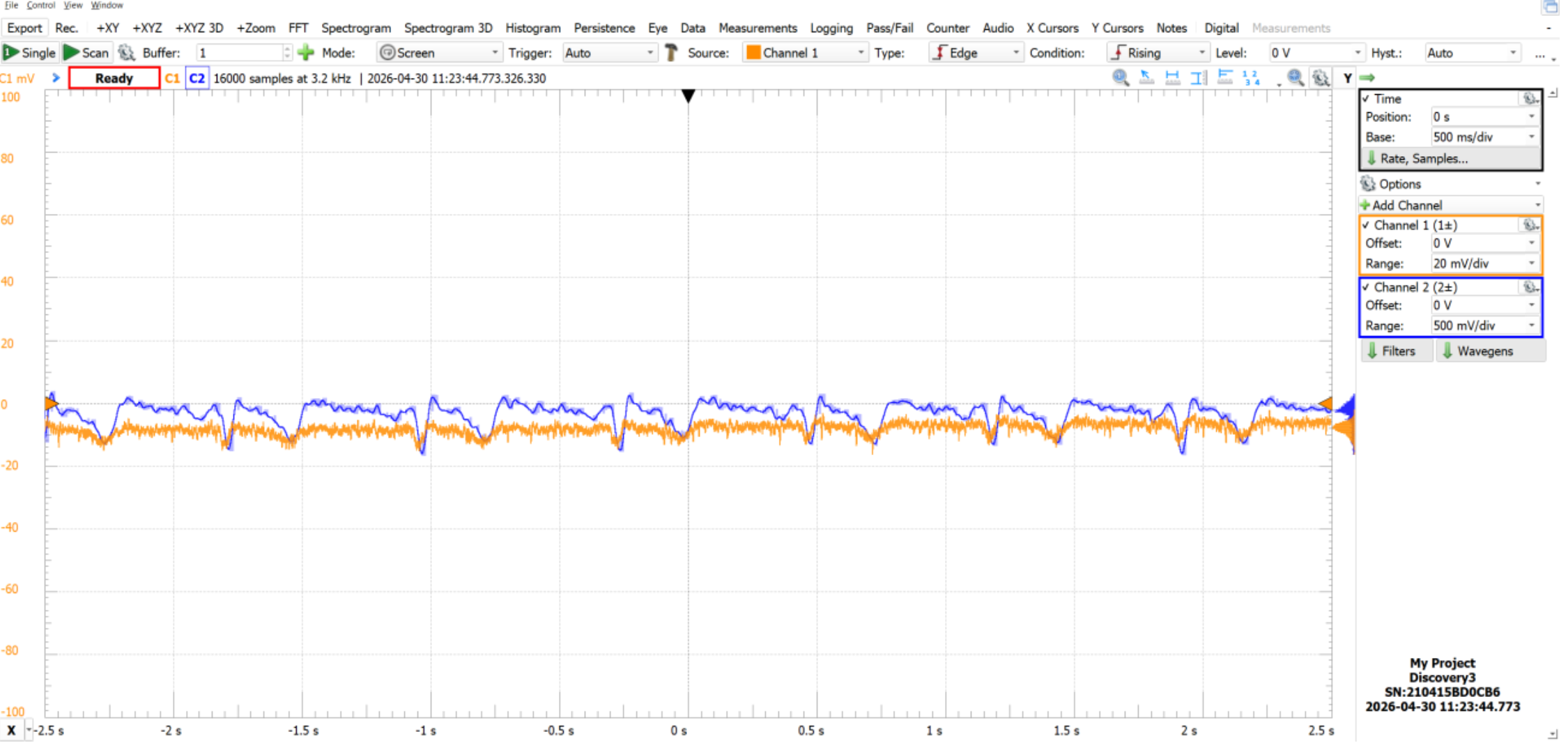
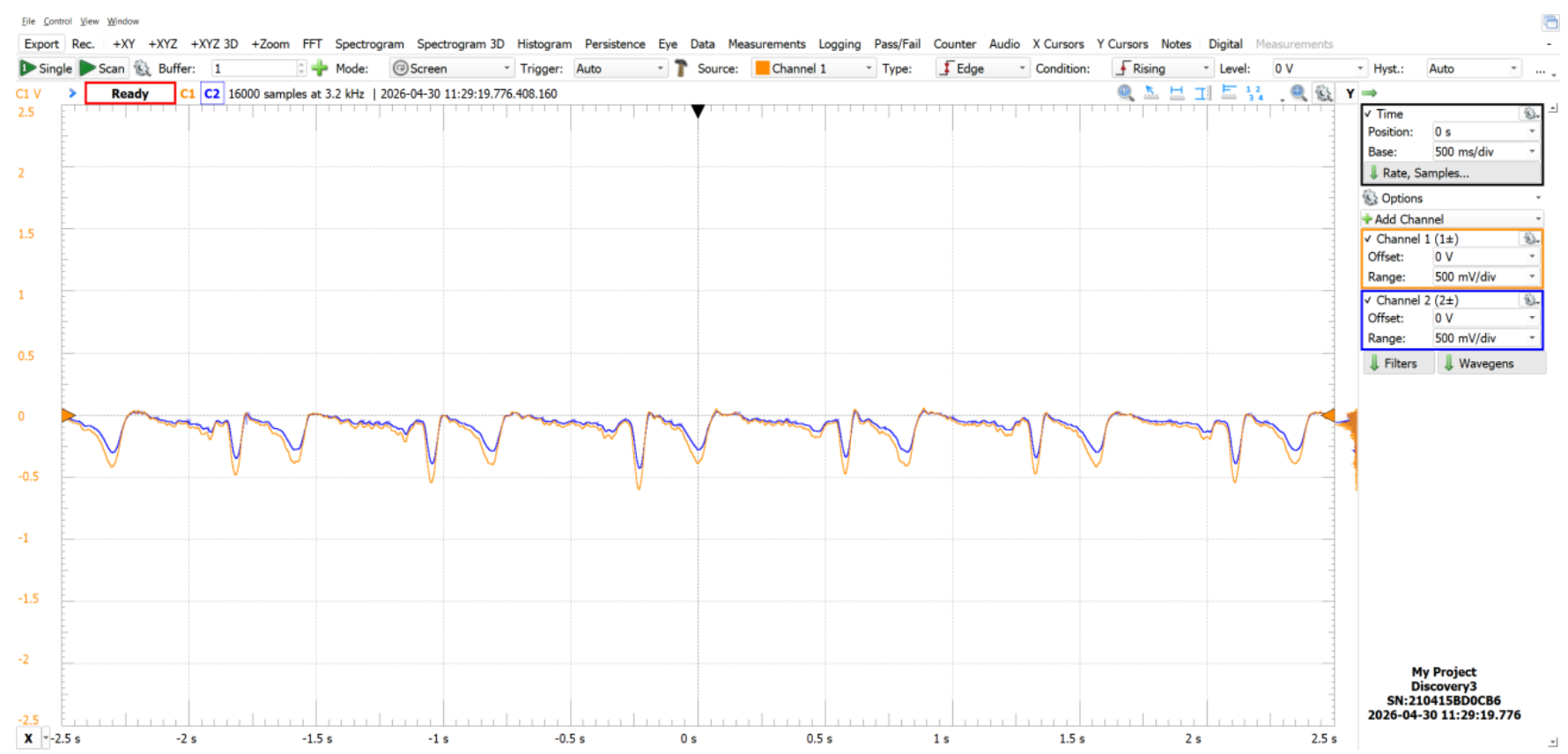
After integrating all four stages, I connected the completed circuit to electrodes placed on my arms and leg to measure my heart's electrical activity. Using an oscilloscope, I observed the ECG waveform and compared the signal before and after the 60 Hz notch filter.
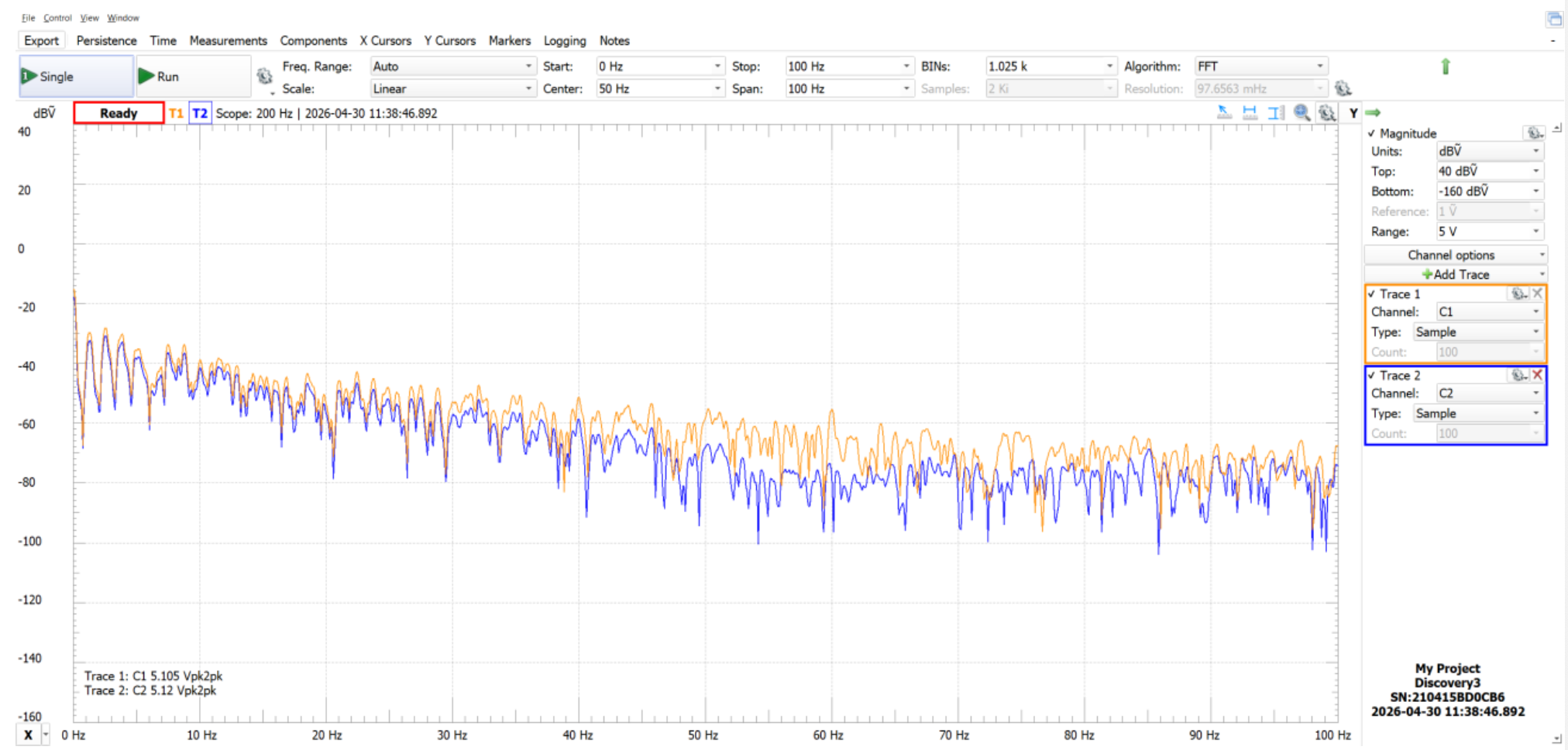
I also measured the frequency spectrum from 0 to 100 Hz to evaluate the filter's performance. Comparing the spectra before and after the notch filter showed the reduction in 60 Hz interference while preserving the frequency components associated with the heartbeat.
The completed system successfully acquired, amplified, and filtered real-time cardiac signals, demonstrating the effectiveness of the combined analog signal-conditioning stages.